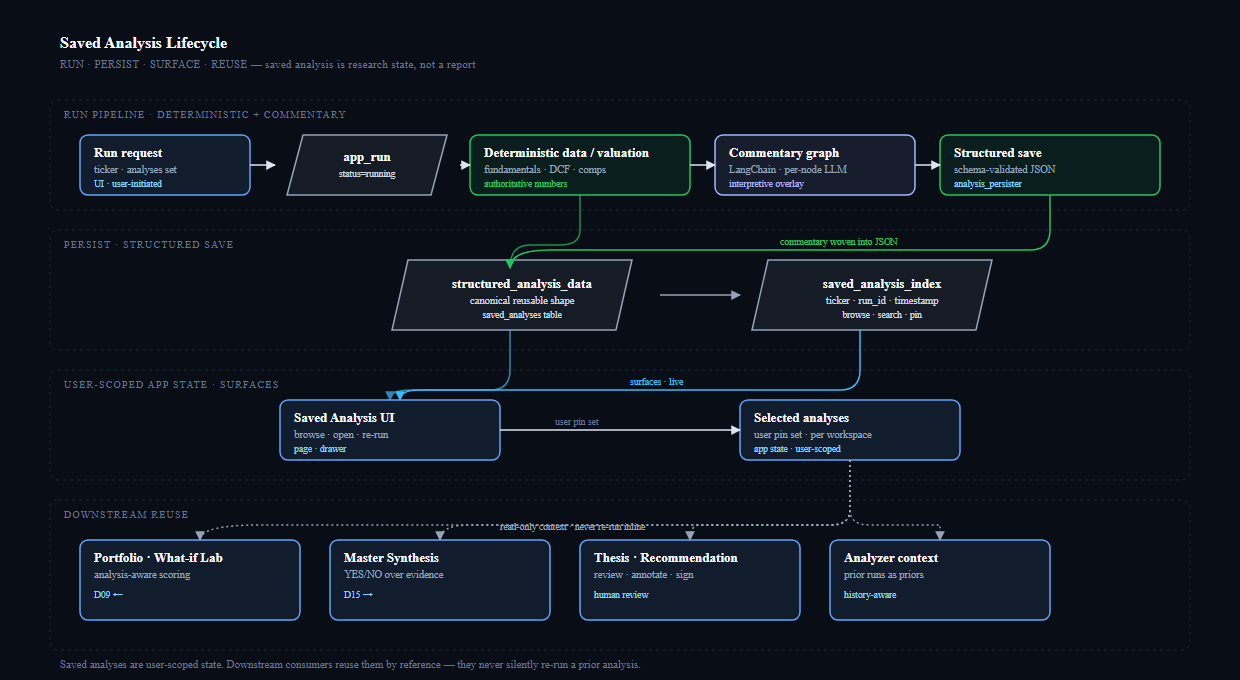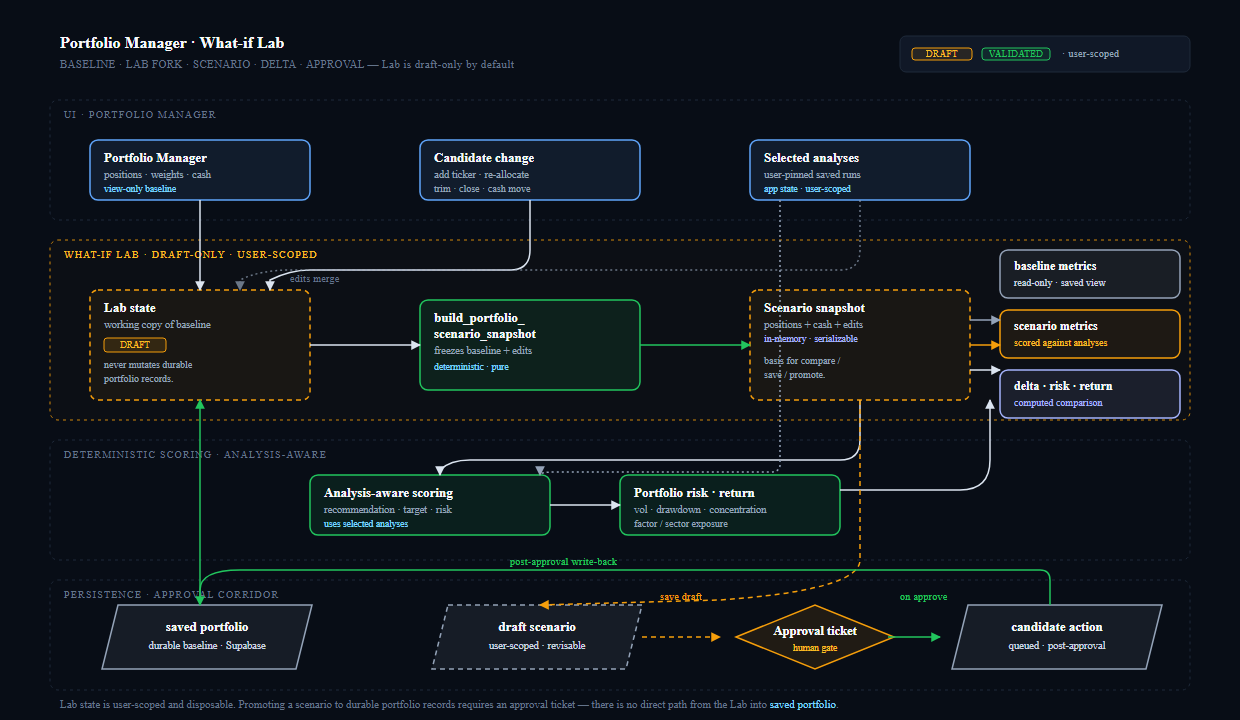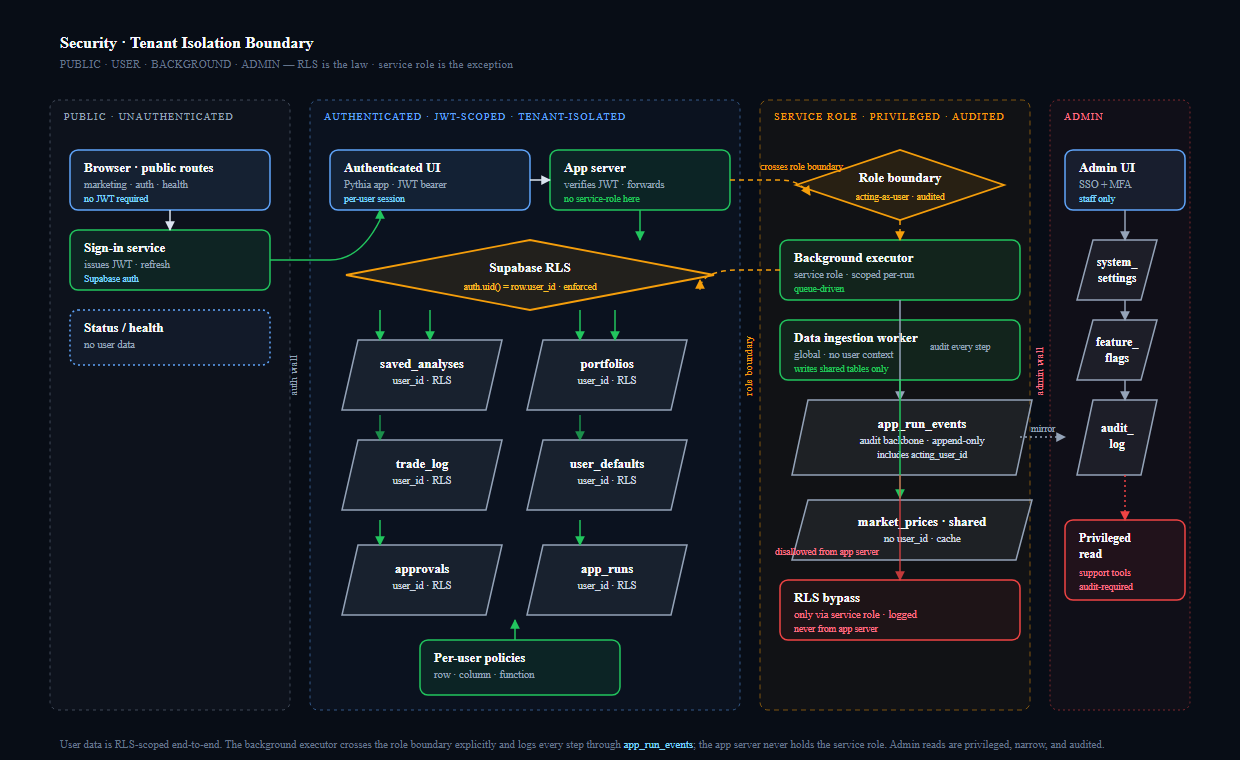
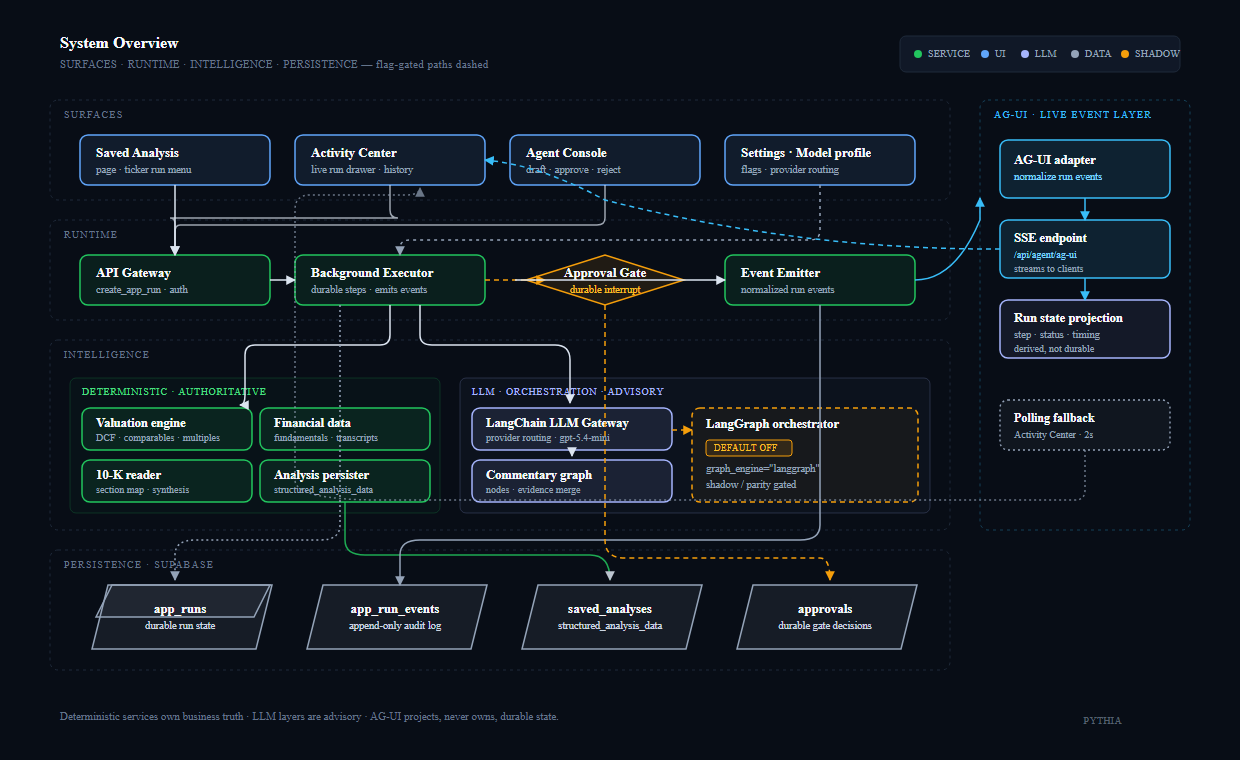
The launch copy is not separate from the product story. It is the public entry point into the repo and what it proves.
How To Use This Kit
This page is meant to make the launch easy. The post copy below is written to send people into the public Pythia Blog hub:
- Pythia Blog hub: https://pythia-analytics.com/blog
- Whitepaper: https://pythia-analytics.com/blog/technical-whitepaper
- AI story: https://pythia-analytics.com/blog/my-experience-with-ai
- Portfolio 8 report: https://pythia-analytics.com/blog/portfolio-8-report
If you deploy to a different public domain, update APP_BASE_URL before copying the final text.
Primary LinkedIn Post
I started coding with GPT-3.5 and zero prior coding experience.
Since November 2024, I have been building a project called Pythia Analytics: a Dash app that brings together equity analysis, valuation workflows, portfolio tooling, macro context, saved research, trade logging, and AI-assisted synthesis in one place.
What makes this project important to me is not just the feature list. It is the fact that the repo became my way of learning how software actually works: routing, shared utilities, state, persistence, auth, debugging, and the difference between a script that runs once and a product that can keep evolving.
A big portion of this app was built with much more novice versions of LLMs, before the current wave of IDE integration made the workflow dramatically easier. That meant tiny context windows, browser chats, constant copy-pasting into VS Code, and repeatedly re-uploading files just to preserve enough context to keep moving. If those earlier tools were enough to help me go from zero experience to shipping this much software, then the point now is even stronger: these tools are too powerful to ignore.
I also increasingly think coding is one of the best ways to learn how to use AI well, because software forces precision. It exposes shallow reasoning quickly and teaches you how to test, debug, and iterate instead of just accepting plausible-sounding output.
I wrote up the public story in Pythia Blog here: https://pythia-analytics.com/blog
There are four parts:
- a technical whitepaper on the app and architecture
- a first-person writeup on my experience learning through AI
- a Portfolio 8 report showing a real public-safe case study
- a launch kit showing how I am packaging the project publicly
AI was the lever, but the real lesson was learning how to think in systems.
Shorter Variant
I started coding with GPT-3.5 and no prior coding background.
Since November 2024, I have been building Pythia Analytics, a multi-page Dash app for equity research, valuation workflows, portfolio tooling, market context, saved analysis, trade logging, and AI-assisted synthesis.
A lot of it was built with early, much weaker LLMs before IDE integration became standard. That is one reason I am going public with it: I want people to see how powerful these tools already were, and how impossible they are to ignore now.
I turned the project into a public Pythia Blog section so the code has a readable story around it: https://pythia-analytics.com/blog
It includes a technical whitepaper, my AI learning story, and the launch assets themselves.
The Portfolio 8 case study is here: https://pythia-analytics.com/blog/portfolio-8-report
Carousel / Slide Structure
Slide 1
From zero coding experience to shipping a real app with AI
Slide 2
Started with GPT-3.5 Used one real project as the curriculum
Slide 3
What the app does - equity analysis - portfolio workflows - macro dashboard - saved research - trade log - AI-assisted synthesis
Slide 4
What I actually learned - architecture boundaries - state and routing - persistence and auth - debugging generated code - turning ideas into product surfaces
Slide 5
Why I made Pythia Blog public - to make the code legible - to show product thinking - to document the learning arc - to show how powerful AI already was before today's tooling
Slide 6
Portfolio 8 case study - invested-sleeve return separated from account-level cash - winners and losers ranked by contribution bps - thesis timing and app evidence tables included
Slide 7
Read the full story https://pythia-analytics.com/blog
Pinned First Comment
Here is the public Pythia Blog hub with the full write-up: https://pythia-analytics.com/blog
Whitepaper: https://pythia-analytics.com/blog/technical-whitepaper My AI build story: https://pythia-analytics.com/blog/my-experience-with-ai Portfolio 8 report: https://pythia-analytics.com/blog/portfolio-8-report
Happy to share more about how I used AI as leverage without letting it replace the hard parts of the work.
One of my biggest takeaways is that coding may be the best way to learn how to use AI seriously, because it forces you to test whether your reasoning actually holds up.